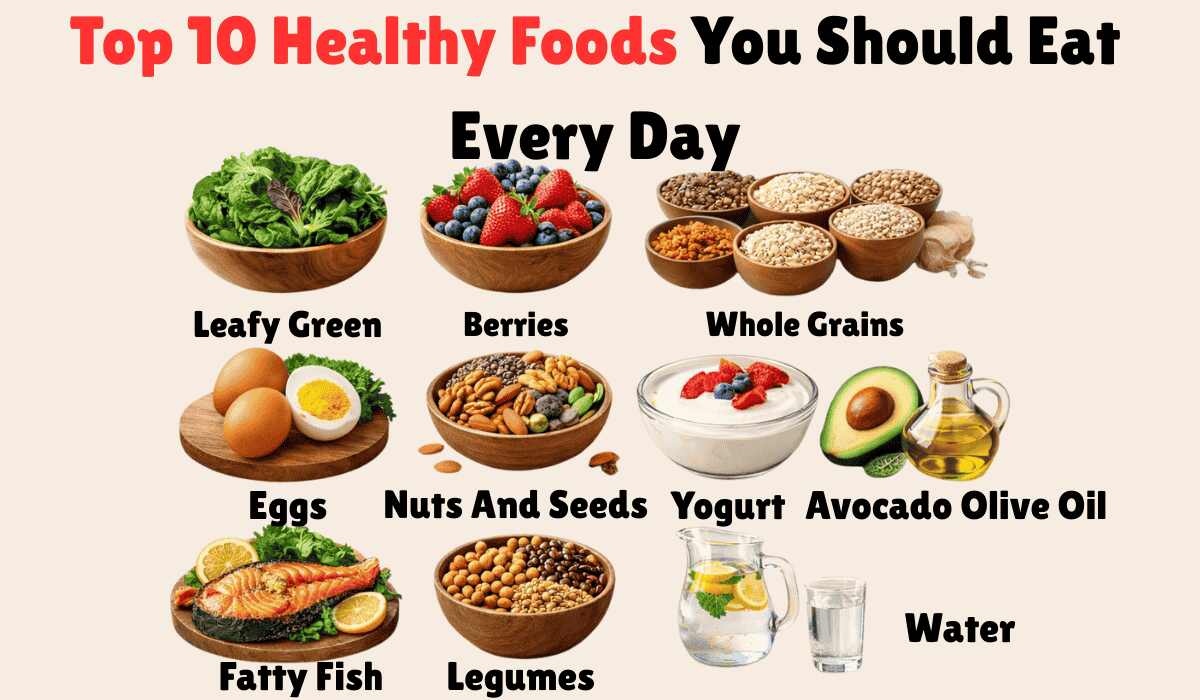
Maintaining a healthy lifestyle begins with the food you choose every day. Eating nutritious, well-balanced foods helps boost energy levels, strengthen the immune system, improve digestion, and lower the risk of chronic diseases. Rather than following restrictive or complicated diet plans, focusing on simple, nutrient-dense foods can significantly improve overall health and long-term well-being.
1. Leafy Green Vegetables
Leafy greens like spinach, kale, lettuce, and Swiss chard are among the healthiest foods on the planet. They are low in calories but packed with essential vitamins such as vitamin A, C, K, and folate.
Health Benefits:
- Improve digestion
- Support heart health
- Strengthen bones
- Boost immunity
Adding leafy greens to salads, smoothies, or cooked meals is an easy way to increase daily nutrient intake.
2. Fruits (Especially Berries)
Fruits provide natural sweetness along with fiber, antioxidants, and vitamins. Berries such as blueberries, strawberries, and raspberries are especially powerful due to their high antioxidant content.
Health Benefits:
- Protect cells from damage
- Improve brain function
- Support healthy skin
- Aid digestion
Try to eat a variety of fruits daily to benefit from different nutrients.
3. Whole Grains for Lasting Energy
Whole grains like brown rice, oats, quinoa, and whole wheat are rich in fiber and complex carbohydrates. Unlike refined grains, they keep you full for longer and help maintain stable blood sugar levels.
Health Benefits:
- Improve digestion
- Support heart health
- Provide long-lasting energy
- Reduce risk of type 2 diabetes
Choose whole grains over refined options whenever possible.
4. Eggs: A Complete Protein Source
Eggs are one of the most affordable and nutrient-dense foods available. They contain high-quality protein and essential nutrients like choline, vitamin D, and B vitamins.
Health Benefits:
- Support muscle growth
- Improve brain health
- Promote eye health
- Help with weight management
Eating one egg a day is generally safe and healthy for most people.
5. Nuts and Seeds for Healthy Fats
Nuts and seeds such as almonds, walnuts, chia seeds, flaxseeds, and pumpkin seeds are packed with healthy fats, protein, and minerals.
Health Benefits:
- Improve heart health
- Reduce inflammation
- Support brain function
- Promote healthy skin and hair
A small handful daily is enough to gain their benefits.
6. Yogurt and Probiotics for Gut Health
Yogurt is rich in probiotics, which are beneficial bacteria that support gut health. Greek or plain yogurt is best because it contains less sugar and more protein.
Health Benefits:
- Improve digestion
- Strengthen immunity
- Support bone health
- Aid weight control
Add fruits or seeds instead of sugar for flavor.
7. Fatty Fish Rich in Omega-3
Fatty fish like salmon, sardines, mackerel, and tuna are excellent sources of omega-3 fatty acids.
Health Benefits:
- Support heart health
- Improve brain function
- Reduce inflammation
- Promote healthy joints
Aim to eat fatty fish at least 2–3 times a week.
8. Legumes: Plant-Based Nutrition
Legumes include lentils, chickpeas, beans, and peas. They are rich in plant-based protein, fiber, and essential minerals.
Health Benefits:
- Improve digestion
- Support muscle health
- Help control blood sugar
- Promote heart health
They are an excellent choice for both vegetarians and non-vegetarians.
9. Healthy Fats from Olive Oil and Avocado
Healthy fats are essential for the body. Olive oil and avocados provide monounsaturated fats that support overall health.
Health Benefits:
- Improve heart health
- Support brain function
- Reduce bad cholesterol
- Help absorb vitamins
Use olive oil for cooking and add avocado to salads or sandwiches.
10. Water: The Foundation of Good Health
Although not a food, water is essential for life and overall health. Staying hydrated supports every function of the body.
Health Benefits:
- Improve digestion
- Boost energy levels
- Support skin health
- Help detox the body
Aim to drink at least 8 glasses of water daily.
Final Thoughts: Building a Healthy Lifestyle
Maintaining good health starts with making smart food choices every day. By including nutrient-rich foods like leafy green vegetables, fruits, whole grains, and healthy proteins in your daily diet, you can naturally boost energy levels, strengthen immunity, and support overall well-being. Healthy eating doesn’t require strict diets or expensive foods—consistency and balance are what matter most. Small changes in your daily meals can lead to long-term health benefits and a better quality of life.
What are healthy foods?
Healthy foods are natural, minimally processed foods that provide essential nutrients such as vitamins, minerals, fiber, and protein. These include vegetables, fruits, whole grains, lean proteins, healthy fats, and legumes.
How many healthy foods should I eat every day?
There is no fixed number, but a balanced daily diet should include a variety of food groups. Eating different types of vegetables, fruits, whole grains, and proteins helps ensure your body receives a wide range of nutrients.
Are leafy green vegetables important for daily health?
Yes, leafy green vegetables are rich in essential nutrients and are commonly included in balanced diets. They are low in calories and provide vitamins and minerals that support general health.
Can healthy eating improve energy levels?
Eating a balanced diet with nutrient-rich foods can help support steady energy levels throughout the day. Whole foods provide sustained energy compared to highly processed foods.
Are healthy foods suitable for everyone?
Most healthy foods are suitable for general consumption. However, individual needs may vary based on age, health conditions, or dietary preferences. It’s always best to choose foods that suit your lifestyle.
Is drinking water part of a healthy diet?
Yes, staying hydrated is an important part of a healthy lifestyle. Drinking enough water supports normal body functions and overall well-being.